




2024: DeFi again proves safer than CeFi

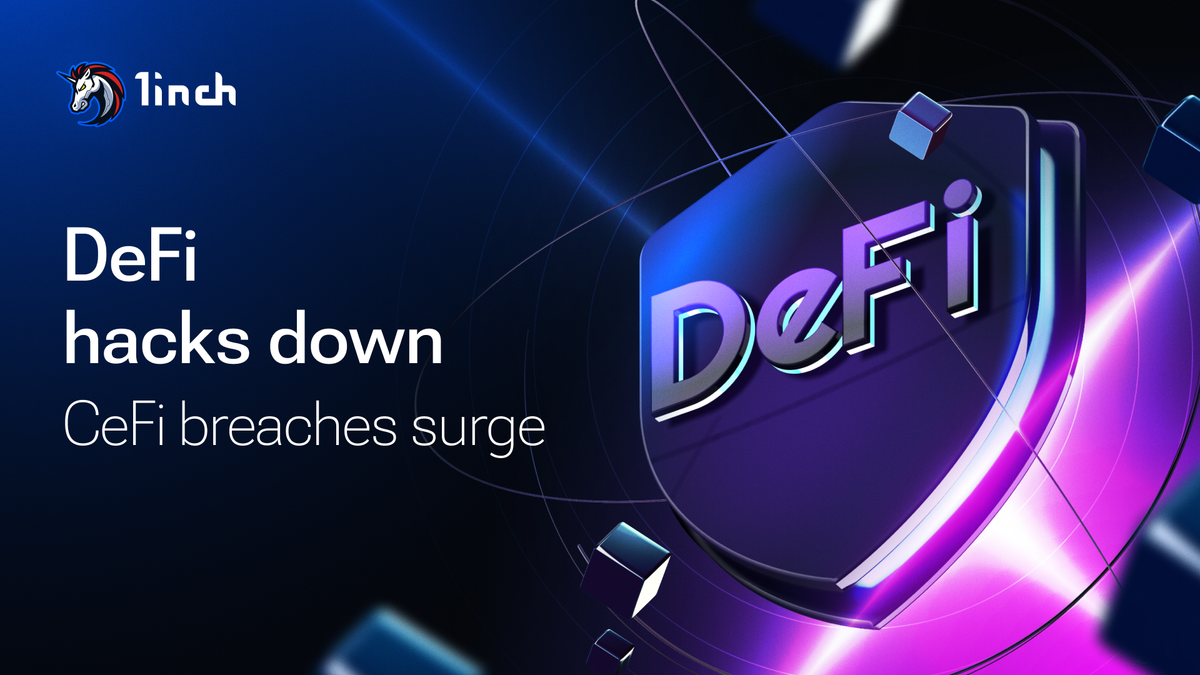
In 2024, DeFi losses saw a 40% decline, underscoring the superiority of decentralized protocols over the CeFi segment, where breaches escalated.
In 2024, Web3 security faced a critical year, with total losses surpassing $2.9 bln, according to annual “Web3 Security Report” from blockchain security firm Hacken.
One notable trend was that DeFi-related losses declined by 40%, as opposed to a surge in CeFi breaches.
The report highlights a sharp contrast between DeFi’s advancements and CeFi’s ongoing challenges. Notably, it points out a significant drop in bridge-related DeFi exploits - historically a major weak spot in DeFi - from $338 mln in 2023 to just $114 mln in 2024. The latter figure is even more impressive, compared with $1.89 bln just two years ago.
By contrast, CeFi struggled in 2024, with financial losses more than doubling from 2023, reaching $694 mln.
The spike in breaches is primarily linked to access control vulnerabilities, with major incidents such as the DMM exchange hack in Q2 and the WazirX hack in Q3 playing a significant role. Both attacks exploited compromised private keys and multisignature flaws, leading to the theft of $305 mln and $230 mln, respectively, from the exchanges.
According to Mikhail Melnik, Chief Blockchain Officer at 1inch, the sheer number of DeFi hacks may not have declined, but the decrease in the total amount of stolen funds is a logical outcome.
“The openness and transparency of DeFi systems have always been their major advantage over closed CeFi systems,” he explained. “As more time passes, more pairs of eyes examine DeFi systems’ code. Therefore, in systems that are well-funded and have been on the market for a long time, the risk of a new hack is significantly reduced.”
However, newer DeFi systems that have only been operating for a short time do not have that advantage," Mikhail added. "In recent years, relatively few new DeFi projects have launched, in contrast to the explosive growth seen during the DeFi summer of 2020."
“The rise in CeFi hack-related losses is also logical,” Mikhail concluded. “The capitalization of crypto is growing, and the sums held by CEXes are increasing. CeFi systems do not benefit from such implicit external audits, as their closed nature makes it much harder for external unaffiliated parties to evaluate the security of the whole system.”
We at 1inch have always been committed to the concept of decentralization, as only decentralized projects can truly keep your funds safe.
Stay safe in the DeFi space with 1inch!
Share the article


 Copy done!
Recent Posts

How AI agents execute on-chain trades: from intent to execution
AI agents are turning DeFi trading into a one-step process: define your goal and let the system handle the rest. Here’s how they move from intent to on-chain execution.
Major global companies’ interest in stablecoin payouts to give a boost to the segment
Major global companies’ interest in stablecoin payouts to give a boost to the segment
1inch and KuCoin Web3 Wallet partner to power gasless, MEV-protected swaps for RWA assets
KuCoin Web3 Wallet, a decentralized, non-custodial, multichain wallet built for seamless access to on-chain ecosystems, now integrates the 1inch Swap APIs - bringing smooth, efficient swaps directly into the wallet.
